Circular Economy 2.0: The New Frontier of Sustainable Business

Why Traditional Circular Economy is no Longer Enough

The circular economy has long been a key driver of sustainable business, focusing on waste reduction, material reuse, and recycling. However, in the face of growing environmental and economic challenges, companies must go beyond simple circularity and embrace Circular Economy 2.0—a model that integrates advanced technologies, regenerative design, and innovative business strategies to create truly self-sustaining ecosystems.


From Recycling to Regeneration: Circular Economy 2.0


The new wave of circular economy practices is no longer limited to recycling, but instead focuses on eliminating waste altogether. Companies must rethink their entire value chain, adopting models that ensure resources are consistently reused to their fullest value.

Enabling Technologies of Circular Economy 2.0:

  • Artificial Intelligence and Machine Learning: Optimizing resource flows and predicting the life cycle of materials to reduce waste and inefficiencies.
  • Blockchain for Transparency: Ensuring traceability in supply chains, preventing greenwashing and promoting ethical sourcing.
  • Advanced Robotics and Automation: Improving the selection and treatment of materials, making recycling more efficient and intelligent.
  • Innovative Business Models: From Ownership to Access
  • Companies adopting Circular Economy 2.0 are moving from traditional product sales to models based on servitization and access. This shift allows companies to maintain control over the life cycle of products, ensuring that resources remain in continuous circulation.

Main Innovations in Business Models:

  • Servitization: Moving from selling products to offering services (e.g. leasing and subscription models).
  • Sharing Economy: Platforms that enable resource sharing and collaborative consumption.
  • Product as a Service: Companies retain ownership while customers pay for use rather than purchase.

Real Case Studies

Several companies are already applying the principles of Circular Economy 2.0, demonstrating that sustainable innovation generates both environmental and economic benefits.

  1. Samsara Eco: The Infinite Recycling of Plastic
    Samsara Eco is developing an enzymatic recycling technology, which allows plastic to be broken down and reused infinitely, avoiding the accumulation of waste. (Source: The Australian)
  2. Decathlon: Circular Sports Equipment
    The sports giant has implemented repairability, rental and second-hand sales strategies to extend the life of products and reduce waste. (Source: Reuters)
  3. ‘Volveré 2.0’: Circular Fashion with Social Impact
    This Spanish initiative focuses on circular fashion, while supporting the inclusion of people with disabilities in the workplace. (Source: Cadena SER)

Why Companies Should Act Now


Circular Economy 2.0 is not just a sustainable trend, but a business necessity. Companies that adopt regenerative practices will be able to:

Gain a Competitive Advantage through sustainable innovation.
Improve Efficiency by reducing waste and optimizing the use of resources.
Align with Regulations in a context of increasingly stringent environmental regulations.
Are You Ready for the Next Evolution of Circularity?
The transition to Circular Economy 2.0 requires bold thinking, technological integration and a concrete commitment to eliminating waste from the system. Companies that act today will lead the sustainable transformation of tomorrow.

💡 Want to know how to integrate Circular Economy 2.0 into your business strategy? Visit: 📩 www.sostenibilitaconsulting.com.
The Business Sustainability Model Canvas®

It was 2020 when I started working on my book, which was published in 2022. I have always seen writing as a way to share my vision, methodology, and approach to sustainability—not just as a personal journey, but as a contribution to the larger conversation about how companies can integrate sustainability into their strategies.

However, five years in, I find myself witnessing an uncomfortable reality: we live in a world where people are often more inclined to appropriate other people’s ideas than to contribute, collaborate, or acknowledge their origin. The essence of thought leadership should be sharing, improving, and expanding knowledge, not renaming and claiming other people’s work.

That’s why I decided to publicly reaffirm the origins of the Business Sustainability Model Canvas, to make clear the motherhood of this concept. Because even if you change the order of the words in the name, the substance doesn’t change.

What is the Business Sustainability Model Canvas?


The Business Sustainability Model Canvas builds on established business modeling approaches, but integrates a multi-stakeholder and multi-capital perspective. It provides a structured methodology to help organizations embed sustainability into their business strategy, decision-making, and value creation models.

Unlike traditional business models, which focus primarily on financial capital and customer value, the Business Sustainability Model Canvas broadens the perspective to include:

✅ Value Proposition: Not just for customers, but for all key stakeholders, considering environmental and social value in addition to economic value.

✅ Value Interface: How organizations engage and interact with different stakeholder groups to generate sustainable impacts.

✅ Value Infrastructure: The key resources, partnerships, and operational strategies needed to integrate sustainability into business processes.

✅ Value Formula: How companies measure and monetize sustainability, balancing financial profitability with social and environmental objectives.

I have always believed that the most valuable contribution to sustainability is the willingness to share knowledge, inspire change and help organizations evolve responsibly.

Let’s build the future of sustainable business together—with ethics and transparency.

🔎 Want to learn more? Visit www.sostenibilitaconsulting.com or refer to my book, where the Business Sustainability Model Canvas was originally published.

Sustainability #BusinessModel #EthicalLeadership #CircularEconomy #UnleashSustainability

Evolution in Action, Sustainability becomes a Growth Strategy

In the world of business, evolution is not an event. It is an ongoing process, made of courageous choices and long-term vision.
Evolution in Action means transforming environmental, social and economic challenges into levers for growth and generating positive impact.

Two emblematic examples? Walmart and Patagonia. Two very different companies, but united by the same attitude: using sustainability as a tool to evolve their business model.

Walmart: Efficiency, Savings and Impact. An Evolution Driven by Data

In the post-Katrina, Walmart responded to a crisis with a strategic decision: zero waste. Not only for ethical reasons, but to make its supply chain more resilient, efficient and competitive.

🎯 Real Results:

Reduction of packaging on a global scale

Doubling of transportation efficiency in 9 years

Cutting 15,000 tons of CO₂

Savings of almost 11 million dollars

👉 This is Evolution in Action: turning sustainability into a real, measurable and replicable advantage.

Patagonia: Rethinking the Product to Reprogram the Future

Patagonia has gone beyond “green” solutions on the surface. It has chosen the boldest path: rethinking the product at the source, integrating sustainability from the design phase.

It has not limited itself to implementing take-back programs: it has responded with a new circular approach, based on three key questions:

“Why do we produce?
How can we extend the life of what we sell?
What kind of impact do we want to have on the planet and on society?”

📌 Evolution in Action also means this: redefining the value of what we offer, placing sustainability as the guiding principle of quality.

Competitive Sustainability: The New Frontier of Innovation

The cases of Walmart and Patagonia demonstrate that competitive sustainability is not a cost to manage, but a strategy for growth. It is an evolution that:

Reduces costs and inefficiencies

Strengthens trust in the brand

Increases resilience

Attracts investment and talent

Creates shared value

Evolution in Action is the new normal for companies that want to thrive over time, not just survive in the short term.

And you, are you evolving or staying still?

The real question for every entrepreneur and manager today is this:

“Am I simply reacting to external changes, or am I driving an internal, conscious and strategic evolution?”

There are no magic formulas, but there are concrete paths to bring sustainability to the center of your business and unleash the potential of your leadership.

Start your Evolution in Action today

At SostenibilitA Consulting we support you in:

Rethinking products and services in a sustainable way

Integrating strategy and impact

Transforming your company into a leading actor of change

📩 Write to us for a consultation
🌐 Visit our website
🚀 The future doesn’t wait: your evolution starts with a conscious choice

Evolution in Action means choosing change, not undergoing it. Are you ready?

The CEO Paradox: Aware of Climate Risk, Blind to Business Impact

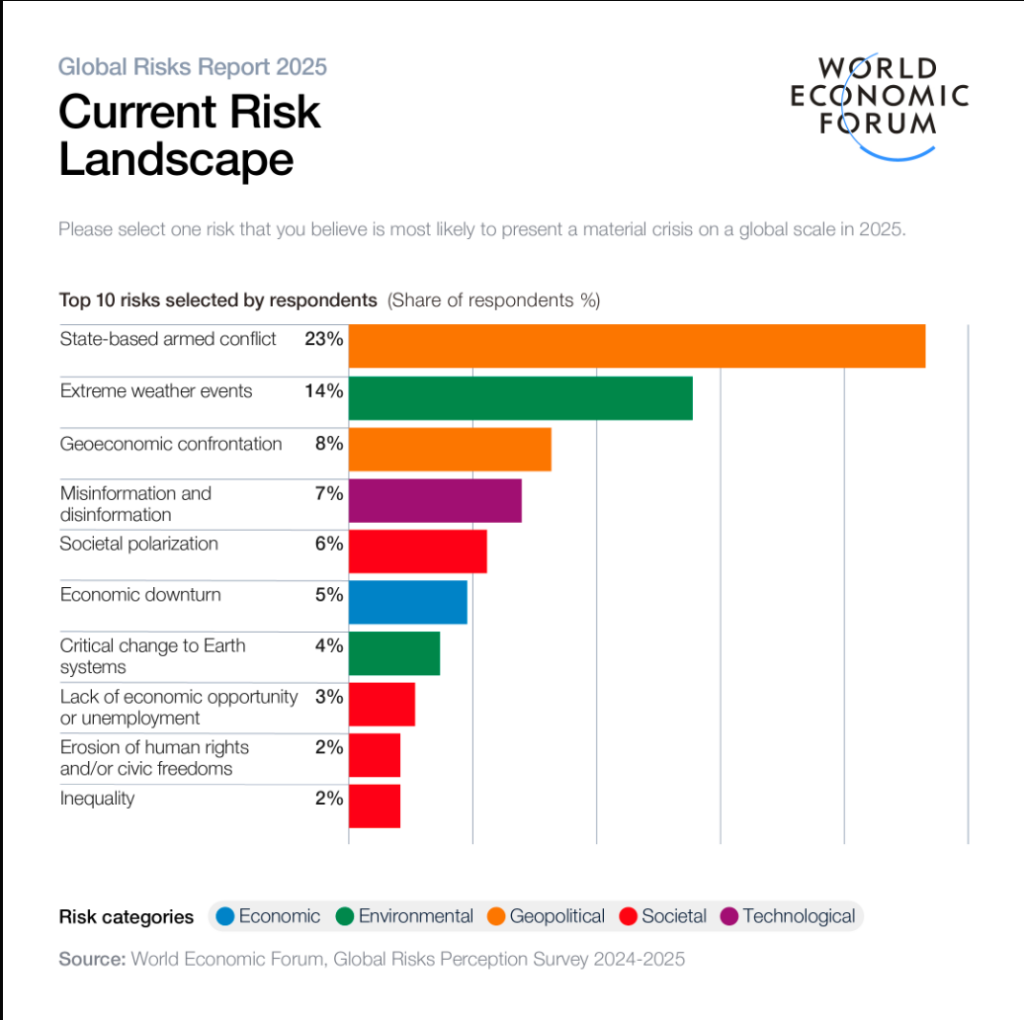
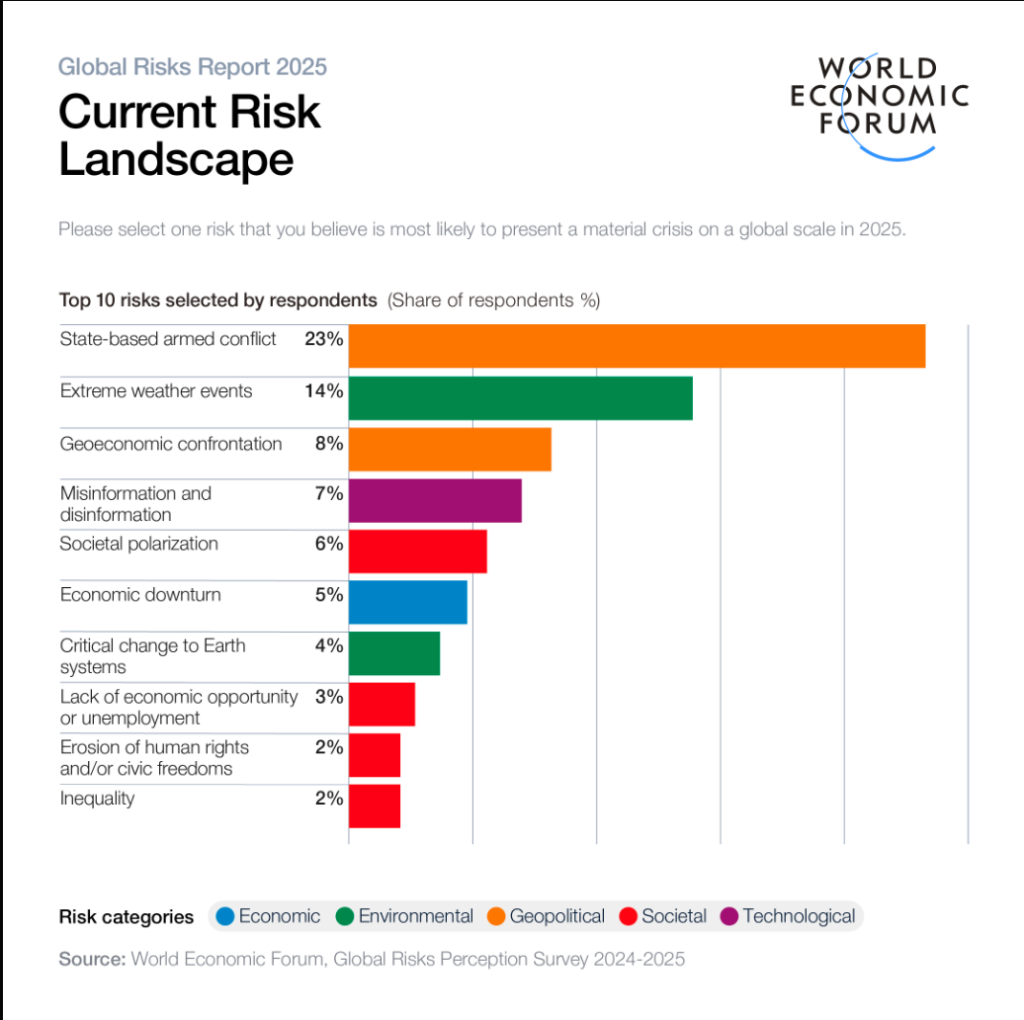
A growing number of studies reveal an alarming paradox: CEOs of large companies are well aware of climate-related risks, yet they consistently underestimate how these risks will affect their own business. As if the climate crisis were always someone else’s problem.

A distorted perception

According to several surveys, including the World Economic Forum report “The Cost of Inaction: A CEO Guide to Navigating Climate Risk” (2024), many CEOs show a gap between theoretical awareness and operational perception. They acknowledge climate change as a systemic threat but fail to prepare for its direct effects on their business model.

Markets are already reacting

This underestimation does not go unnoticed. Financial markets are already factoring climate risks into company valuations. Rating agencies, institutional investors, and ESG funds consider how well companies adapt to changing climate scenarios.

The cost of inaction

The World Economic Forum highlights:

  • Climate disasters have caused over $3.6 trillion in damages since 2000.
  • Global GDP could shrink by up to 22% by 2100 without decisive action.
  • Unprepared companies risk losing between 5% and 25% of EBITDA by 2050.
  • Every $1 invested in resilience can generate up to $19 in future savings.

Turning risk into strategic leverage

Today, businesses have a choice: ignore the signals and risk irrelevance, or transform climate risk into an opportunity for strategic evolution. Sostenibilità Consulting is here to guide companies in aligning climate, strategy, and competitiveness.

CEO consapevoli dei rischi, ma ciechi sull’impatto diretto.

Un numero crescente di studi rivela un paradosso inquietante: i CEO delle grandi imprese riconoscono l’esistenza dei rischi legati al cambiamento climatico, ma tendono a sottovalutare l’impatto che questi avranno sulle loro stesse aziende.
Come se il clima riguardasse sempre “gli altri”.

Una percezione distorta

Secondo diverse indagini, tra cui il report del World Economic Forum “The Cost of Inaction: A CEO Guide to Navigating Climate Risk” (2024), molti amministratori delegati dimostrano una discrepanza tra la consapevolezza teorica e la percezione operativa del rischio. Comprendono che il cambiamento climatico rappresenta una minaccia sistemica, ma non si preparano ad affrontarne le conseguenze dirette nel loro modello di business.

I mercati non aspettano

Questa sottovalutazione non passa inosservata. I mercati finanziari stanno già scontando i rischi climatici nelle valutazioni delle imprese. Le agenzie di rating, gli investitori istituzionali e i fondi ESG tengono conto della capacità delle aziende di adattarsi ai nuovi scenari climatici.

I numeri dell’inazione

Il World Economic Forum segnala che:

  • I disastri climatici hanno causato oltre 3.600 miliardi di dollari di danni dal 2000.
  • Il PIL globale potrebbe ridursi fino al 22% entro il 2100 in assenza di azioni efficaci.
  • Le aziende non preparate rischiano una perdita tra il 5% e il 25% dell’EBITDA entro il 2050.
  • Ogni 1 dollaro investito in resilienza può generare fino a 19 dollari in risparmi futuri.

Trasformare il rischio in leva strategica

Le imprese hanno oggi una scelta: ignorare i segnali e rischiare l’irrilevanza o trasformare il rischio climatico in un’opportunità di evoluzione strategica. Sostenibilità Consulting affianca le aziende proprio in questa direzione: allineare clima, strategia e competitività.


Impactful Leadership and Competitive Evolution: Why Sustainability Is No Longer Optional

Despite the progress made in recent years at national, European, and international levels, the current climate around sustainability feels increasingly tense. Geopolitical instability, the resurgence of aggressive anti-green policies, disinformation campaigns, and economic protectionism are casting shadows over global environmental goals. The recent shift in U.S. leadership, for instance, has felt like a cold shower for those hoping that shared values would continue to guide political and economic decision-making.

In this complex landscape—where part of society defends the principles of the 2030 Agenda while another actively dismantles them—clarity is needed. The ASviS Spring Report 2025, titled “Scenarios for Italy in 2035 and 2050: The False Dilemma Between Competitiveness and Sustainability,” provides just that.

Sustainability Makes Economic Sense

Produced in collaboration with Oxford Economics, the report outlines four potential scenarios for Italy’s economic future, analyzing how ecological transition could impact key sectors. The message is clear: investing in sustainability is economically beneficial.

Decarbonization, circular economy models, and green innovation lead to tangible gains, including:

  • greater energy autonomy and lower costs,
  • increased productivity,
  • financial solidity,
  • more inclusive and equitable development.

The idea that sustainability and competitiveness are at odds is outdated. Italian companies that embraced the green and digital transition have seen improved productivity, financial health, and investment capacity.

When Businesses Believe in Sustainability

According to Istat (2021–2022), 38% of Italian companies with three or more employees undertook at least one environmental initiative. In the manufacturing sector, environmental sustainability led to a productivity premium of 5–8%, and circular economy practices saved over €16 billion in production costs.

Financially, “circular companies” also demonstrate stronger debt coverage ratios and healthier investment profiles. Research by The European House – Ambrosetti shows that 92% of family-owned businesses and 89% of non-family companies report concrete benefits from integrating sustainability into their business models.

But to maximize these benefits, Italy must invest in skills, education, and a long-term vision—areas where the country still lags behind.

Four Futures for Italy: 2035 and 2050

Oxford Economics modeled four possible futures:

  1. Net Zero: A global carbon tax and robust decarbonization policies initially reduce Italy’s GDP by 1% in 2035. But by 2050, productivity gains drive a +3.5% increase over the baseline.
  2. Net Zero Transformation: With strong innovation and policy investment, GDP would already be 1.1% higher by 2035, and unemployment lower by 0.7 percentage points. By 2050, GDP would be +8.4% above baseline.
  3. Late Transition: Delaying policies until 2030 would backfire. A harsher carbon tax would create inflationary pressures, and GDP would fall 2.4% by 2035, with unemployment rising to 8%.
  4. Climate Catastrophe: Increased fossil fuel demand, extreme climate events, and emissions volatility would cause GDP to plummet by 23.8% by 2050, with unemployment reaching 12.3%.

The direction is clear. Delay is no longer an option.

A Call for Transformational Acceleration

Italy’s most recent policy tools—its budget law, revisions to the national recovery plan (PNRR), and fiscal strategies—have largely missed the opportunity to drive sustainable change. As ASviS Scientific Director Enrico Giovannini warns, the country lacks the “step change” required to close the gap with the SDGs.

The solution? A Transformational Acceleration Plan (TAP). The next budget law should include urgent measures to:

  • modernize healthcare systems,
  • strengthen education for future challenges,
  • align economic strategies with the EU’s competitiveness compass,
  • upgrade the National Integrated Energy and Climate Plan (PNIEC),
  • turn cities into sustainable innovation labs,
  • protect environmental commons.

Coherence Is a Strategic Asset

The good news is: it’s not too late. Italy has a roadmap—the National Sustainable Development Strategy, adopted in September 2023 during the UN SDG Summit. It simply needs to act on it. As Giovannini reminds us, being coherent with what we’ve already committed to is the first, indispensable step toward a competitive and sustainable future.


Sostenibilità e competitività: una falsa contrapposizione da superare

Nonostante i progressi degli ultimi anni, sul fronte della sostenibilità sembra tirare una brutta aria. La tensione geopolitica, il ritorno di approcci politici aggressivi e anti-ecologici, la disinformazione crescente e la crisi climatica stessa stanno generando un clima di incertezza. La recente fase politica statunitense, ad esempio, ha riacceso timori che pensavamo superati: può davvero la sostenibilità guidare le scelte politico-economiche globali?

Eppure, in questo contesto a due velocità – dove una parte della società difende l’Agenda 2030 e un’altra la attacca frontalmente – servono strumenti chiari per orientarsi. Il Rapporto di Primavera dell’ASviS 2025, intitolato “Scenari per l’Italia al 2035 e al 2050. Il falso dilemma tra competitività e sostenibilità”, prova a fare esattamente questo.

La sostenibilità conviene, anche sul piano economico

Il documento, redatto con Oxford Economics, presenta quattro scenari evolutivi per l’Italia, analizzando l’impatto della transizione ecologica sull’economia nazionale. Il dato più evidente? Investire nella sostenibilità conviene.

Decarbonizzazione, economia circolare e innovazione verde non solo migliorano la competitività delle imprese, ma offrono benefici concreti:

  • energia più autonoma e meno costosa,
  • maggiore produttività,
  • solidità finanziaria,
  • sviluppo equo e sostenibile.

Chi parla ancora di conflitto tra sostenibilità e competitività alimenta una narrazione superata. Le aziende italiane che hanno integrato la sostenibilità nei loro modelli operativi, secondo ASviS, hanno visto crescere produttività, attrattività e performance finanziarie.

Le imprese che credono nella transizione

Secondo Istat, il 38% delle imprese italiane ha già messo in campo iniziative di tutela ambientale. Le più attive? Quelle del manifatturiero, che registrano anche un incremento della produttività tra il 5% e l’8%. Dati confermati da CDP, secondo cui l’economia circolare ha generato oltre 16 miliardi di euro di risparmio nei costi di produzione.

Anche le imprese familiari, secondo Ambrosetti, hanno ben compreso il valore strategico della sostenibilità: il 92% la ritiene vantaggiosa per reputazione e fiducia nel brand. Il problema? L’Italia, pur avendo le potenzialità, non sta facendo abbastanza per rendere questo cambio di passo sistemico.

Guardando al futuro: quattro scenari, un’unica direzione

Il Rapporto presenta quattro scenari al 2035 e al 2050:

  1. Net Zero: la decarbonizzazione porta inizialmente a un lieve calo del PIL, ma già dal 2045 si inverte la tendenza, con un +3,5% al 2050.
  2. Net Zero Transformation: politiche strutturali e investimenti portano benefici già dal 2035 (+1,1% PIL) e un netto +8,4% al 2050.
  3. Transizione tardiva: ritardare costa caro. Il PIL cala del 2,4% e cresce la disoccupazione.
  4. Catastrofe climatica: senza interventi, il PIL crollerebbe del 23,8% nel 2050 e la disoccupazione raggiungerebbe il 12,3%.

La direzione, insomma, è chiara. Serve accelerare. Ora.

Serve un piano di accelerazione trasformativa

La mancanza di visione nelle ultime misure legislative – dalla Legge di Bilancio 2025 alla revisione del PNRR – ha rappresentato un’occasione persa. Come sottolinea Giovannini, serve un Piano di Accelerazione Trasformativa che includa:

  • una scuola in grado di formare cittadini e lavoratori del futuro,
  • una sanità più resiliente,
  • città che diventano laboratori per l’Agenda 2030,
  • un sistema economico che integri la competitività con i beni comuni ambientali.

Essere coerenti è un atto politico

Siamo ancora in tempo. Ma la sostenibilità, quella vera, richiede scelte coraggiose, coerenti e condivise. Le imprese stanno facendo la loro parte. Ora tocca alla politica dotarsi di visione e strumenti all’altezza.


🔗 Vuoi approfondire?
Consulta il Rapporto di Primavera ASviS 2025 e guarda la presentazione di Enrico Giovannini per comprendere perché sostenibilità e competitività non sono alternative, ma alleate.

Cambiamento Climatico: Giovani imprenditori alla guida delle soluzioni

Perché l’innovazione guidata dai giovani sta trasformando le soluzioni climatiche


Quando parliamo di transizione climatica, immaginiamo spesso tecnologie avanzate, politiche globali e grandi investimenti. Eppure, la vera innovazione sta emergendo anche in luoghi meno visibili: tra le mani di giovani imprenditori dell’Asia-Pacifico che stanno ridefinendo il modo in cui affrontiamo il cambiamento climatico.

La loro visione è chiara: non si tratta solo di contenere i danni, ma di costruire un futuro radicalmente nuovo.


Oltre la sensibilizzazione: dal coinvolgimento giovanile al cambiamento sistemico

Questi giovani non si limitano a “fare sensibilizzazione”. Stanno riscrivendo interi modelli economici, spesso in comunità vulnerabili, dove le risorse sono poche ma la creatività è tanta.

Article content

Storie reali di innovazione climatica guidata dai giovani

  1. Eco Stove – Pakistan Stufe solari che riducono la dipendenza dalla legna da ardere, migliorano la salute delle donne e tagliano le emissioni.
  2. Care for Coral – Thailandia Educazione comunitaria e tecnologia per proteggere le barriere coralline e la biodiversità marina.
  3. Eco-Sentinels – Bangladesh Una piattaforma basata sui dati per aiutare gli agricoltori locali ad adattarsi agli eventi climatici estremi.
  4. Tzu Chi Collegiate Youth – Malesia Campagne urbane di sostenibilità condotte da giovani per promuovere stili di vita a basso impatto e cittadinanza attiva.

Tre fattori chiave della leadership giovanile orientata al cambiamento climatico:

  • Rigenerazione oltre la mitigazione: riparare gli ecosistemi, non solo ridurre i danni.
  • Collaborazione radicale: unire ONG, comunità, imprese e reti giovanili.
  • Mentalità imprenditoriale sostenibile: innovazione culturale, non solo tecnologica.

Perché le imprese devono ascoltare

Chi guida oggi le aziende ha una responsabilità precisa: ascoltare queste voci e trasformare quell’energia in strategia concreta.

Questi giovani imprenditori non sono concorrenti: sono alleati strategici nella costruzione di modelli di business resilienti, inclusivi e rigenerativi.


Generation Hope è già qui. E si sta trasformando in Generation S.

Leggendo queste storie, non vedo solo speranza: vedo l’ascesa della Generation S. Una generazione guidata da Sostenibilità, Solidarietà, Strategia e Sguardo Sistemico. Una generazione che non chiede il cambiamento: lo costruisce, giorno dopo giorno.

Questo è ciò che ho sempre sognato di realizzare: una nuova mentalità, in cui la sostenibilità non è un reparto, un titolo o una voce nel bilancio, ma una lente con cui osservare il mondo, l’economia e le nostre responsabilità. Generation S non ha un’età. Ha il coraggio di agire in modo diverso. E oggi, quella generazione esiste già. Siamo pronti a riconoscerla — e a farne parte?


💡 Scopri di più

Vuoi integrare l’energia delle soluzioni giovanili nella tua strategia aziendale? 📩 www.sostenibilitaconsulting.com


Chi è Francesca D’Angelo Con oltre 25 anni di esperienza, Francesca D’Angelo aiuta le aziende a integrare la sostenibilità nel cuore della strategia, trasformandola in un motore di innovazione, impatto e vantaggio competitivo.

fonte: https://www.unescap.org/story/generation-hope-meet-young-entrepreneurs-leading-charge-climate-solutions

https://www.linkedin.com/pulse/generation-hope-young-entrepreneurs-leading-charge-climate-d-angelo-nncaf

Generation Hope: Young Entrepreneurs Leading the Charge on Climate Solutions

Why Youth-Led Innovation Is Reshaping Climate Solutions

When we talk about climate transition, we often picture advanced technologies, global policies, and large-scale investments. Yet, true innovation is also emerging in less visible places: in the hands of young entrepreneurs across Asia-Pacific who are redefining how we respond to climate change.

Their vision is clear: it’s not just about damage control—it’s about building a radically new future.


Beyond Awareness: From Youth Engagement to Systemic Change

These young people aren’t just “raising awareness.” They are rewriting economic models—often in vulnerable communities—where resources are scarce but creativity is abundant.


Real Stories of Youth-Driven Climate Innovation

  1. Eco Stove – Pakistan Solar-powered stoves reduce reliance on wood fuel, improving women’s health and cutting emissions.
  2. Care for Coral – Thailand Community education and technology combine to protect coral reefs and marine biodiversity.
  3. Eco-Sentinels – Bangladesh A data-driven platform helping local farmers adapt to extreme weather events.
  4. Tzu Chi Collegiate Youth – Malaysia Youth-led urban sustainability campaigns promoting low-waste lifestyles and civic engagement.
Article content

Three Key Drivers of Youth Climate Leadership

  • Regeneration over mitigation: healing ecosystems, not just reducing harm.
  • Radical collaboration: bridging NGOs, communities, businesses, and youth networks.
  • Sustainable entrepreneurial mindset: cultural, not just technological, innovation.

Why Businesses Should Listen

Today’s business leaders have a responsibility: to listen—and to turn this energy into actionable strategy.

These young entrepreneurs are not competitors—they are strategic allies in designing resilient, inclusive, regenerative business models.


Generation Hope Is Already Here. And It’s Becoming Generation S.

Reading these stories, I don’t just see hope — I see the rise of Generation S. A generation guided by Sustainability, Solidarity, Strategy, and Systems Thinking. A generation that doesn’t ask for change — it builds it, day after day.

This is what I’ve always hoped to realize: a new mindset where sustainability is not a department, a title or a marketing claim — but a lens through which we see the world, the economy, and our responsibilities. Generation S is not defined by age. It’s defined by courage. And today, that generation already exists. Are we ready to recognize it — and be part of it?


💡 Learn More

Want to integrate youth-driven sustainability into your business strategy? 📩 www.sostenibilitaconsulting.com


About Francesca D’Angelo With over 25 years of experience, Francesca D’Angelo helps businesses embed sustainability into the heart of strategy—transforming it into a powerful driver of innovation, impact, and competitive edge.

Quando l’IA e la sostenibilità richiedono lucidità, non slogan

Mi era caduto l’occhio su uno dei tanti post che cercano di rassicurare tutti raccontando che l’IA è sostenibile perché consuma meno della TV.

Lì per lì ho sorriso, poi ho pensato che no, non potevo restare in silenzio.

Questo articolo è per chi non si accontenta degli slogan. Per chi vuole guardare in faccia la complessità e scegliere con consapevolezza. Perché è proprio l’intelligenza umana, non quella artificiale, a darci gli strumenti per farlo.

Foto di Markus Winkler su Unsplash

La fallacia del confronto comodo

Dire che l’IA è sostenibile perché consuma meno della TV è come dire che le cucine a gas inquinano meno di quelle a carbone. Vero, ma irrilevante. Non è così che si misura la sostenibilità.

La sostenibilità non si definisce per confronto, ma per coerenza sistemica: intenzione, impatto, contesto.

I dati, in ordine. Per capire davvero.

Ecco alcune fonti autorevoli che ci aiutano a guardare oltre la superficie:

  1. European Environmental Agency – 2023 Digitalisation and Sustainability L’IA, se non governata, accelera l’obsolescenza tecnologica, aumenta i rifiuti elettronici e la pressione sulle risorse critiche.
  2. MIT Technology Review – 2023 Training GPT-3 emitted more carbon than 100 cars L’addestramento del modello GPT-3 ha generato circa 552 tonnellate di CO₂, pari a un anno di emissioni di oltre 100 auto.
  3. Stanford AI Index Report – 2024 AI’s environmental cost is rising despite efficiency gains Nonostante i miglioramenti, l’impatto ambientale dell’IA continua a crescere: più calcoli, più energia, più hardware.
  4. MIT Sloan Management Review – febbraio 2024 The Relationship Between Machine Learning and Climate Change L’IA può contribuire alla transizione climatica solo se integrata in modo etico e consapevole.
  5. IEA – Electricity 2024 Report Electricity demand from data centres and AI will double by 2026 Entro due anni, i data center supereranno i 1000 TWh/anno. Più di quanto consuma l’intero Giappone.

Una parte della storia:

  • si stima che oggi l’IA rappresenti meno di 1/10.000 del consumo elettrico globale;
  • le perdite d’acqua domestiche negli USA sono 30 volte più impattanti dell’impronta idrica dell’IA;
  • DeepMind ha ridotto del 20% i consumi dei data center;
  • Line Vision, FIDO Tech, Microsoft e altri stanno facendo molto con l’IA applicata all’efficienza e al monitoraggio ambientale.

Tutto vero. Ma è solo parte della storia.

Perché quei dati non contraddicono i precedenti: li completano. E ci ricordano che la tecnologia non è sostenibile in sé. Lo è solo se progettata, regolata e usata in modo intenzionale.

Inoltre, i dati positivi mostrano ciò che è possibile, ma non ciò che è diffuso. Le soluzioni esistono, ma non sono ancora lo standard. I casi virtuosi sono importanti, ma non bastano a riequilibrare una crescita che, se non guidata, rischia di amplificare disuguaglianze e impatti ambientali.

Senza una governance consapevole, il rischio è che i benefici rimangano eccezioni, mentre i costi ricadano su tutti.

L’intelligenza artificiale non sostituisce la nostra. La amplifica.

Ecco perché abbiamo bisogno di lucidità, non slogan. Di visione, non comodità. Di pensiero critico, non automatismi.

La sostenibilità è ancora un atto umano. Una scelta. Una responsabilità.


Francesca D’Angelo

Founder, SostenibilitA Consulting

dangelo@sostenibilitaconsultin.com

www.sostenibilitaconsulting.com